David Boyce Piano Services


Piano Tuner in Inverclyde, Renferwshire, Glasgow, the west of Scotland and beyond. 


De Falla Ritual Fire Dance .mp3

This page integrates my Pianopinions blog http://pianopinions.tumblr.com/   Please go there to post your questions, opinions, viewpoints and thoughts on all matters pianistical.  This page, which embeds my Tumblr pianopinions blog doesn't for some reason, display the explanatory text posted with many of the photos. To read the blog properly (and respond if you wish) please go to http://pianopinions.tumblr.com/

Also visit my Facebook Page:

Pianopinions

The piano Blog of www.davidboyce.co.uk Follow also on David Boyce Piano Services

Promote your Page too

Posted 742 weeks ago
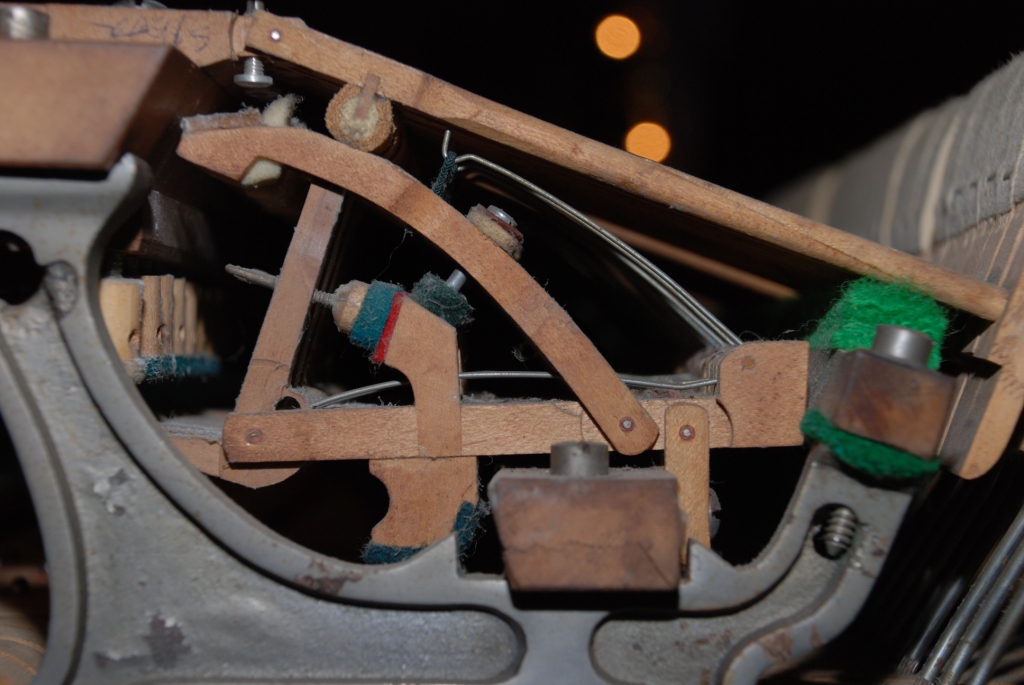
<p>This is part of the action for one note from a 1969 piano action. This was relatively early days in the use of plastics for piano action parts.  This action had become stiff and sluggish. Examination showed the cause to be tight centres.  The parts in a piano action move in little “hinges” called flanges. A metal centre pin (generally nickeled bronze) rotates in a hole bushed with special cloth. In this piano the jacks (the upright part in the middle) rotated freely, but all other centres were tight. The jack  centres rotate in wood flanges, and all the others in plastic.</p>
<p>Discussion online brought to light that these early plastic parts are undergoing some continuing “curing” process that is causing them to swell. Other technicians working with the same type of action from the same period report a similar phenomenon.</p>
<p>In this instance, use of a special lubricant designed for piano action centres, was sufficient to get the action playing again reasonably well. But if this swelling process continues, the bushings will get too tight.  The best solution in that event, is to replace all the plastic flanges with modern ones, probably wooden.  (Modern plastic materials, however, are much superior to their early counterparts, and are found in some very classy piano actions).</p>

This is part of the action for one note from a 1969 piano action. This was relatively early days in the use of plastics for piano action parts.  This action had become stiff and sluggish. Examination showed the cause to be tight centres.  The parts in a piano action move in little “hinges” called flanges. A metal centre pin (generally nickeled bronze) rotates in a hole bushed with special cloth. In this piano the jacks (the upright part in the middle) rotated freely, but all other centres were tight. The jack  centres rotate in wood flanges, and all the others in plastic.

Discussion online brought to light that these early plastic parts are undergoing some continuing “curing” process that is causing them to swell. Other technicians working with the same type of action from the same period report a similar phenomenon.

In this instance, use of a special lubricant designed for piano action centres, was sufficient to get the action playing again reasonably well. But if this swelling process continues, the bushings will get too tight.  The best solution in that event, is to replace all the plastic flanges with modern ones, probably wooden.  (Modern plastic materials, however, are much superior to their early counterparts, and are found in some very classy piano actions).

Posted 745 weeks ago

Pianopinions

This blog will be a place for my opinions, thoughts, and prejudices on all things piano, piano technology, piano music, piano recordings and pianists. And for your opinions on those things too, if you’d care to share them. Your Pianopinions.

Posted 746 weeks ago


Share your thoughts on all things piano on my Pianopinions blog! http://pianopinions.tumblr.com

All parts and contents of this website are the intellectual property of David Boyce unless otherwise indicated, and may not be copied without permission.
© David Boyce 2022